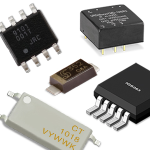
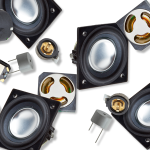

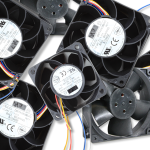
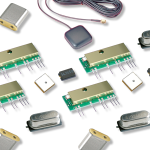
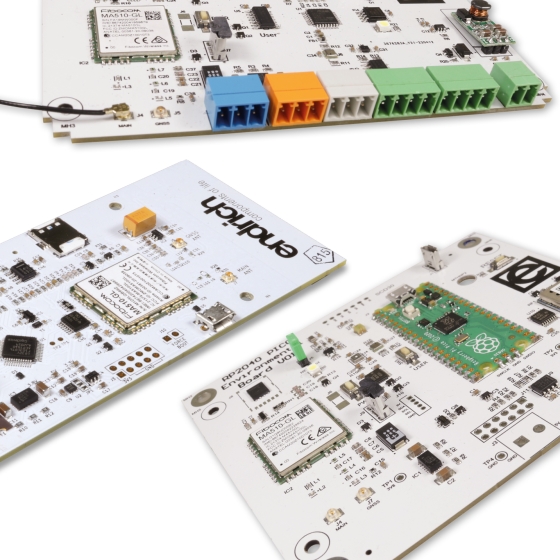
The basis of the IoT product family offered by endrich is the E-IoT board with the multiple award-winning RISC-V architecture-based microcontroller from GigaDevice. During the development of the board, the focus was on the use of an industrial single-board computer. This is capable of independently recording various environmental parameters, processing the data from the sensors used with the help of its microcontroller and delivering it to the endrich IoT cloud via the available LPWA (NB-IoT / LTE-M) or via the GSM 2G network. A significant part of the installed electronic components are products from endrich's own suppliers. Therefore, the E-IoT board is also suitable as an engineering evaluation kit to support component sales.
Endrich's sales engineers are able to successfully demonstrate the operation of seven different sensors, GSM and GPS antennas, DC/DC converters, MEMS oscillators, etc. by presenting a single device. If a customer develops an IoT node based on endrich's solutions, there is no need to install a separate GIGADEVICE GD32 RISC-V and FIBOCOM MA510 evaluation kit. Business partners can access a combined test panel that can be used for a wider range of tasks at favourable conditions. In addition, the complete hardware and software description of the SBC computer is published freely accessible on the knowledge portal https://E-IoT.info according to an open-source concept. The toolkits and the corresponding sample codes can also be accessed. As an additional evaluation kit, a complete demo package for testing the CE-RED certified 3BIG-MOD LPWA modem was released. The basic concept of E-IoT pursues three goals. Firstly, it is intended to serve as an evaluation tool to support the sale of the components presented. However, the actual goals of the development are two other segments. E-IoT can transform any conventional device into a "smart" device by incorporating this telemetry hardware into the original device without changing its functions. So, an IoT computer is built into the casing of a conventional device to connect it to the IoT. Through external or on-board sensors, the original device can continuously send its detected operating parameters or any anomalies to the cloud and receive commands from there if a two-way data connection is possible, for example by using the MQTT protocol.
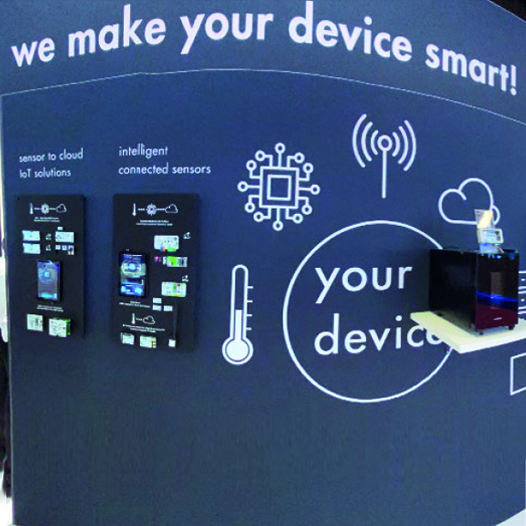
At the Europe-wide trade fairs and exhibitions in 2022, a number of such "smart" devices were presented under the motto "We make Your Device Smart", such as a smart streetlamp that is able to detect vibrations or noises in addition to recording the brightness and temperature conditions of the light engine.
Another example is the concept of the smart refrigerator, which monitors and logs not only the internal and external temperatures, but also the number of door openings and their duration, the operation of the internal refrigerator lamp and the humidity in the cabinet.
The E-IoT concept offers a more complex solution when used in the UV-C air cleaners distributed by endrich's sister company euroLighting GmbH, as here monitoring of the air quality is realised in addition to continuous recording of the operating parameters. The basic telemetry supports preventive maintenance, i.e. the repair and replacement of wearing parts, and the air quality monitoring increases user comfort. This product variant also pursues endrich's most important E-IoT goal, namely the provision of an evaluation platform for its own IoT-based product development. With the help of the E-IoT board and the external sensors connected to it, a model of the product to be developed can be created. With this, trial, testing and software development can be carried out immediately. This saves time to create the final product optimised in size and functionality.
endrich itself has also produced a number of these derived proof of concept (PoC) products. These developments include the telemetry device for a UVC air purifier described earlier, which was awarded the Grand Prix at the HungExpo exhibition in May 2022. The "Smart Board", an expanded and improved version, with its own local WLAN LPWA gateway, can also receive data using a MESH network from wireless smart sensors. Using the NeoMesh protocol with a subgigahertz carrier frequency, the wireless sensors can seamlessly transmit their data to the Smart Board in harsh industrial environments. The smart board acts as a NeoMesh LPWA gateway, ensuring that the data provided by each element of the local sensor network is transmitted to the cloud via one of the available LTE/GSM standards NB-IoT, LTE-M or 2G. As endrich is strongly committed to environmental protection, another LPWA gateway device, the cityBox, was developed to monitor air quality in cities. This device is also a variant of the E-IoT hardware platform.
Other peripherals include a low-cost individual sensor board connected via the I2C or SPI bus and the "mini monitor" with pmOLED display. For developers working with other MCU platforms, a family of sensor and communication solutions is available as a 2in1 solution that turns an Arduino Leonardo or Raspberry Pi compatible single-board computer into a standalone IoT node. In this way, development engineers who work according to a different principle but still want to use endrich's sensor and communication solutions can also be addressed.
The E-IoT concept also includes a complex software toolkit. The embedded software is the firmware version written in C/C++ and is designed for ARM/RISC-V based microcontrollers. The source and sample code of the UDP and MQTT communication as well as the human- and machine-readable versions for the E-IoT v052 board are freely available at https://e-iot.info with detailed explanations. All hardware components of E-IoT described so far are based on the MCU families GigaDevice GD32 (ARM and RISC-V), Microchip SAMD21 and SAMD51 as well as RP2040, so the corresponding firmware versions can also be found in this software layer. The next important service package is the WEB-based endrich Cloud Database, which is hosted by an Apache Web Server under a special Linux distribution in combination with a relational MySQL database. This is where the ECDB user management takes place and where the authorised IoT devices can also be managed.
A UDP port monitoring service and an MQTT broker ensure that no data from a smart sensor is lost in the CloudDB. A web-based administration portal is available for device management, where endrich's partners can freely register their own E-IoT or other IoT devices with personalised access. The cloud-based database allows customers to download sensor data and serves the endrich Visualization Gateway. With this free graphical data visualisation service, smart sensor data can be monitored on an internet-connected mobile device. The user interface of the Administration Layer is the web-based admin tool. The Visual Layer consists of the endrich Visual Gateway Service and the newly developed IoS App for installation on Apple devices.
In addition to the data visualisation functions, endrich has integrated a complete knowledge base, technical information on E-IoT, hardware and software manuals, videos, lectures, TV appearances. The collection of white papers and technical writings can also be found there in collected form.
For developers working with other MCU platforms, a family of sensor and communication solutions is available as a 2in1 solution that turns an Arduino Leonardo or Raspberry Pi compatible single-board computer into a standalone IoT node. In this way, development engineers who work according to a different principle but still want to use endrich's sensor and communication solutions can also be addressed.
However, users are not only to access the data via a simple visual representation, but also receive raw data on their own devices (Data Access Layer). This can be done via the admin tool, where data can be extracted in Excel format, or the values can be queried in real time via the new E-IoT Sensor API. In this case, a special web call is required and by specifying the IMEI number of the device and the desired time interval, the sensor readings are delivered in JSON format. With this method, endrich's partners are able to process their data stored in the endrich Cloud in their self-developed software system in real time.